

Introduction
Moving to Barcelona is an exciting adventure! As an EU citizen, you have the right to live and work in Spain without a visa, thanks to EU free movement. However, there are still a few important bureaucratic steps to take so you can settle in legally and comfortably. Don’t worry, this guide will walk you through how to get your NIE, register your address, and handle other key processes in plain English, as if a friend were explaining it to you. We’ll also reference the actual Spanish laws behind these steps, so you know it’s all by the book. Let’s get started!
What is the NIE (Número de Identificación de Extranjero) and Why Do You Need It?
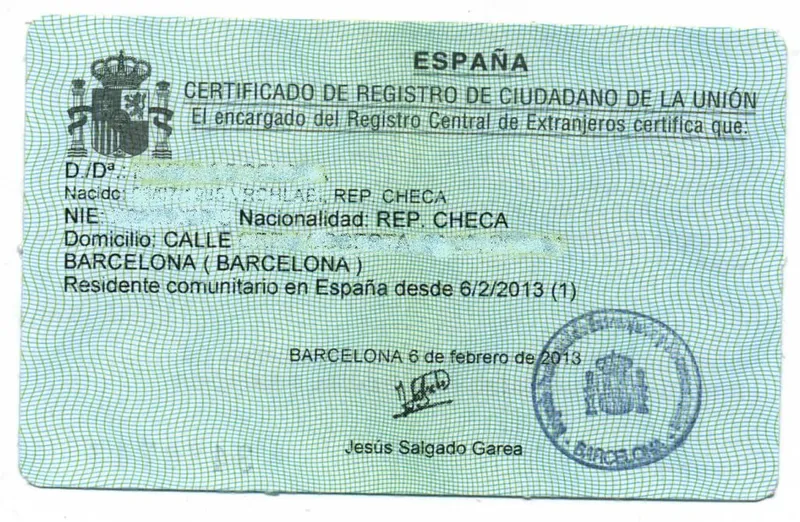
NIE stands for Número de Identificación de Extranjero, meaning “Foreigner Identification Number.” It’s essentially a tax/ID number for foreigners in Spain. For EU citizens moving to Spain, the NIE is issued as part of the “EU Citizen Registration Certificate” a green paper card that shows your name, address, nationality, and NIE number. This green NIE certificate doesn’t have your photo or fingerprints, so it’s not a standalone ID, you’ll always show it together with your passport or national ID.
Why do you need an NIE? Spain requires EU nationals who live in Spain for over 3 months to register and get this certificate (this comes from Royal Decree 240/2007, Spain’s law implementing EU free movement rules). In fact, Article 3.3 of Real Decreto 240/2007 explicitly says that EU citizens planning to reside in Spain beyond 90 days must apply for a registration certificate (which includes your NIE). This is not just bureaucratic fluff, without an NIE, you’ll struggle to do many everyday things in Spain. For example, you typically need an NIE to open a bank account, sign a rental contract, hook up utilities or Wi-Fi, get a local mobile phone plan, start a job, or even join a gym. It’s essentially your key to Spanish life.
Side note: Failing to obtain your NIE in time could technically result in a fine under Spanish law (Organic Law 4/2015 on citizen security allows fines of €100–€600 for not registering). In practice, this isn’t common, but it’s another good reason to get your paperwork done. Plus, once you have your NIE certificate, it does not expire for EU citizens, it’s valid indefinitely (even if a printed date appears). So, let’s see how to get it, step by step.
Step 1: Find a Place to Live and Register Your Address (Empadronamiento)
The first thing you’ll want to do when settling in Barcelona is find a place to stay (renting an apartment, for example) and then register your address with the city. This process is called empadronamiento, basically signing up in the municipal residents’ register (padrón). It’s a mandatory step for everyone living in Spain, locals and foreigners alike. In fact, Spanish law requires you to register in the local padrón of the city where you reside.
Why do this? Registering on the padrón (getting empadronado) is important because it confirms your residence address and gives you access to local services. Once you register, you can request a Certificado de Empadronamiento (an official certificate of residence) as proof of address. You’ll need this for various things, like maybe signing up for public healthcare or school enrollment for kids. Some offices also ask for it when you apply for your NIE or other documents (requirements vary, but it’s good to have it).
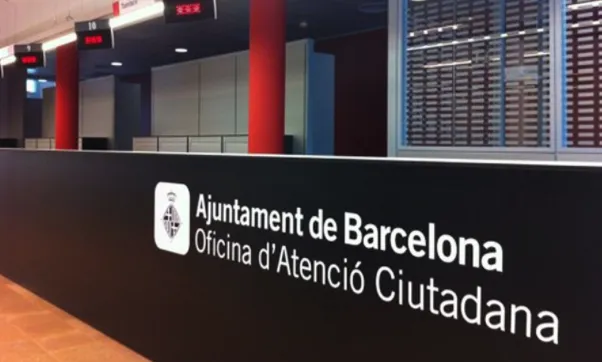
How to register: Empadronamiento in Barcelona is free and relatively straightforward. Go to the Ajuntament (City Council) or a Citizen Information Office near you to register. You can book an appointment online or by calling 010 (the city information line). Due to high demand, an appointment is recommended. When you go, bring your passport or EU ID, your rental contract or deed (proof of address), and fill out the padrón registration form. If you have family members with you, you can register them at the same time. Barcelona even offers online and mail-in options for registration, but if it’s your first time and you’re not familiar with digital certificates, doing it in person might be easier.
Once done, you’ll receive a volante de empadronamiento (a little print-out or PDF confirming you’re registered at X address). Keep that handy! Congratulations, you’re now officially a resident of Barcelona city. This leads to the big one, getting your NIE.
Step 2: Apply for Your NIE (EU Citizen Registration Certificate)
This is the most crucial step for your move: obtaining your NIE number and EU Registration Certificate. As mentioned, if you’re staying more than 3 months, Spanish law says you must get this certificate within those first 3 months. In Barcelona, thousands of newcomers are doing the same, so appointments can be scarce, try to book it as soon as you arrive.
Here’s a friendly roadmap for getting your NIE in Barcelona:
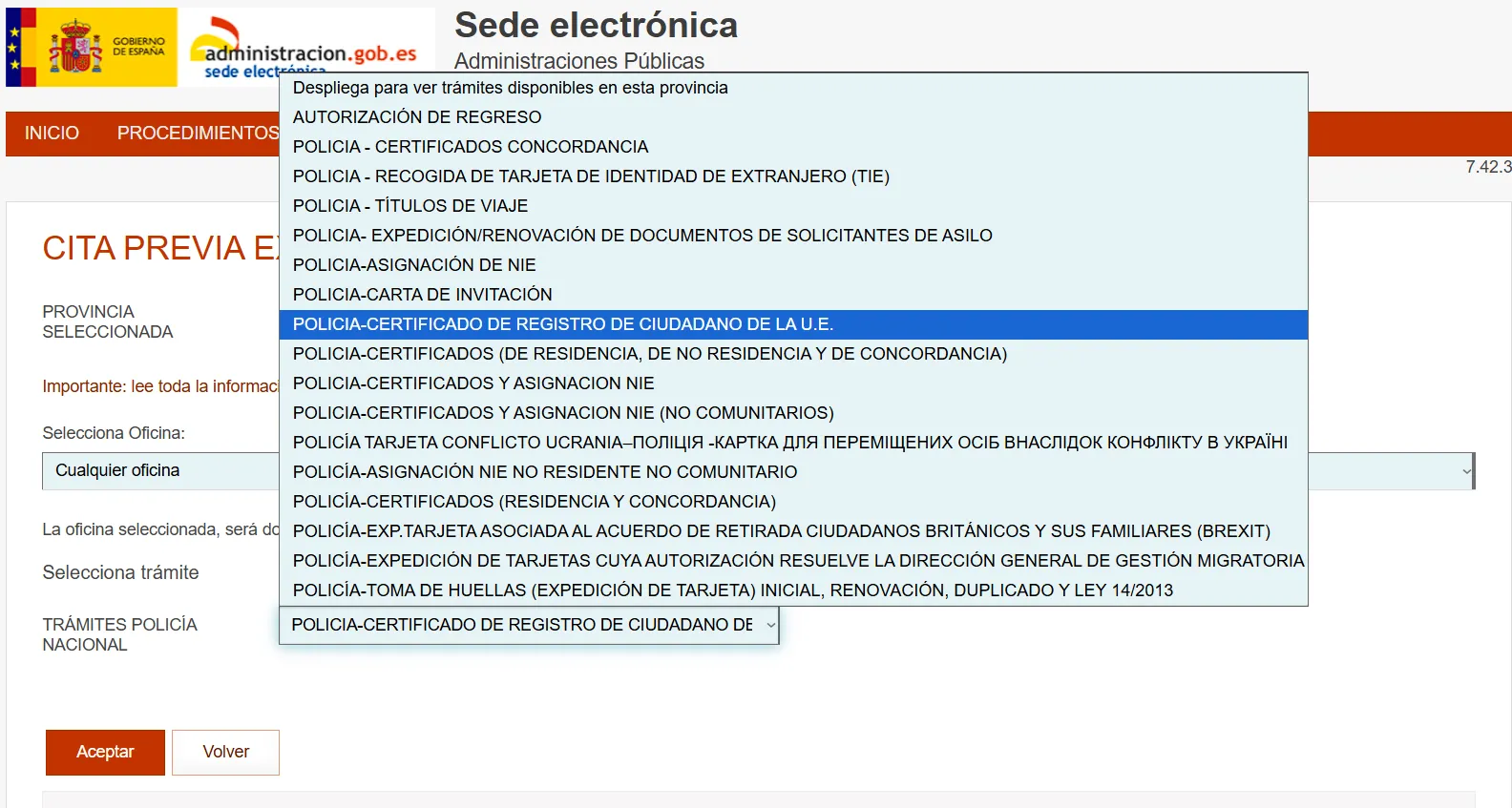
Schedule an Appointment (Cita Previa): NIE applications are handled by the Oficina de Extranjería (Foreigner’s Office) or designated National Police stations usually at sede.administracionespublicas.gob.es . You must book an appointment online via the official portal. On the site, choose Barcelona as province and the trámite “Certificado de Registro de Ciudadano de la UE”. It might take several attempts to find an open slot (no joke, people often refresh the page at odd hours to snag a spot!). Be patient and persistent. Once you get your appointment, note the date/time and location.
Gather Your Documents: Before your appointment, you’ll need to prepare some paperwork:
- Completed EX-18 form (Application for EU Registration) in duplicate. You can download this form from the Spanish immigration portal and fill it out (it’s available in Spanish, you can find unofficial guides in English online).
- Valid passport or national ID (plus a copy). If your passport is expired, bring proof of renewal.
- Proof of appointment confirmation (print the email or screenshot).
- Proof of payment of the NIE fee (more on the fee next).
- Empadronamiento certificate, sometimes required. In Barcelona, it may not always be asked if it’s your first NIE and you haven’t had a prior address in Spain, but some police stations do ask for a padrón certificate. It’s safer to bring it along as proof of address.
Supporting documents for your residency status: Spanish regulations (based on Royal Decree 240/2007 and Order PRE/1490/2012) require you to show that you meet one of the conditions to reside in Spain. Don’t be scared, as an EU citizen, this just means providing one of the following:
- If employed in Spain: a job contract or an employer’s letter confirming you will be hired (for Barcelona, a job offer letter can work even if you haven’t started the job yet). In some cases, they might accept a document showing your social security registration (or you can give consent for them to verify it).
- If self-employed: proof of business activity (e.g. registration of your business, tax registration, or social security as self-employed).
- If not working (economically inactive): proof you have sufficient funds and health insurance. For instance, bank statements or proof of income to show you won’t be a burden on the state, and private health insurance valid in Spain (or an S1 form/EHIC for retirees). The law doesn’t specify an exact amount of funds, it just must be “sufficient” based on your situation. As a guideline, if you can show savings or income above the level of Spanish social assistance, you should be fine.
- If student: proof of enrollment in a Spanish school/university, health insurance (or a European Health Insurance Card), and a statement that you have enough funds or an Erasmus grant, etc.
- Family members of an EU citizen: documents proving the family relationship and that the EU citizen meets one of the above conditions.
Bringing the right documents is probably the trickiest part, because requirements can vary slightly by office and even by officer. The key is to err on the side of more documentation: bring any paperwork you think might help (translated to Spanish if needed). It’s better to have too much info than be missing something.
Pay the NIE Fee (Tasa): Before your appointment, you must pay a small administrative fee at a bank. As of the latest info, the fee is about €12. The form for this is Modelo 790 Código 012. You can download the fee form online, fill it out (select “Certificado de registro de residente comunitario”), print it, and take it to any bank to pay. Many Spanish banks will only accept this payment if you already have a NIE or DNI number on the form. If it’s your first NIE and you have no number yet, some banks might refuse, if that happens, try a different bank or go to a main branch of e.g. Banco Santander or CaixaBank, which are used to these payments. The bank will stamp your form as proof of payment. Bring the stamped receipt to your appointment.
Attend Your Appointment: On the day, go to the specified police station or extranjería office with all your documents neatly organized. Arrive a bit early. Typically, you’ll submit your documents, and the officer will verify everything. If all is in order, they will issue your NIE certificate on the spot, hooray! The certificate is a green A4 sheet (or small card) with your personal details and NIE number. Make sure all the info is correct and keep this document safe. You’re officially registered as an EU resident in Spain now!
A friendly tip: Photocopy or scan your NIE certificate and keep a digital copy. You’ll memorize your NIE number quickly since you’ll use it a lot. Remember, as an EU citizen, your NIE (and the green certificate) does not expire, you won’t need to renew it periodically like non-EU residents do with their TIE cards. Also, since the NIE certificate has no photo, always carry it together with your passport or national ID when doing official errands.
Congratulations! Obtaining the NIE is the biggest hurdle, and you’ve done it! Now, let’s cover a couple more important steps to complete your relocation.
Step 3: Get a Social Security Number (Número de Seguridad Social) if You’ll Work
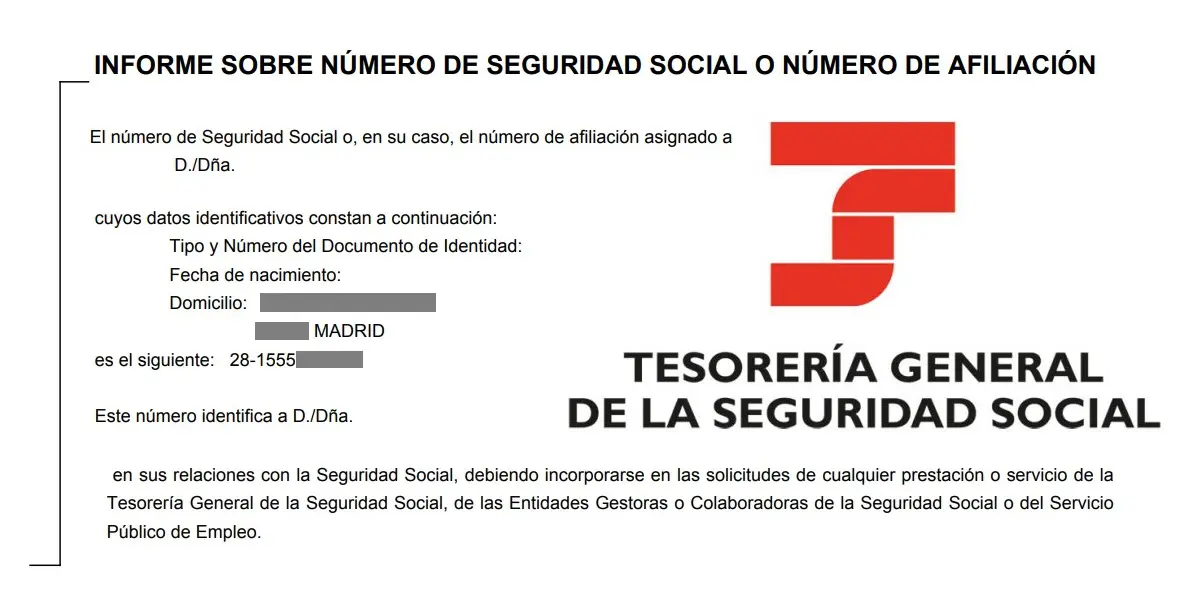
If you’re going to work in Spain (employed or self-employed), the next step is to register with Spanish Social Security. This will give you a Social Security Number, which your employer uses to enroll you in the system (for taxes, pensions, and healthcare coverage). In fact, if you already had a job offer, you might have done this before getting the NIE, but if not, do it now.
How to get your Social Security number: The process is usually straightforward and free. Your employer’s HR department can often handle it for you when you start your job. If you need to do it yourself (say, you’re self-employed or just proactive), you can go to the nearest Tesorería General de la Seguridad Social (TGSS) office. Bring your passport or ID and your NIE certificate. You’ll fill out a short form (called Form TA.1). The staff will issue you a Social Security number on the spot.
Once you have that, if you’re an employee, your company will register you into the system from your job start date, meaning you’ll be contributing and covered for public healthcare, etc. If you’re self-employed (autónomo), you’ll use that number to register for autónomo social security and start paying monthly contributions. In any case, getting the number is a one-time thing and it stays with you for life.
Step 4: Access Healthcare and Get a Health Card
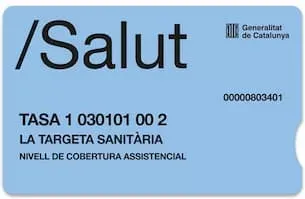
Spain has a great public healthcare system (CatSalut in Catalonia), and as an EU citizen resident you can access it, but you need to follow the steps to get enrolled.
If you are working (or a dependent of someone who is): Once you’re officially in the Social Security system, you and your family members are entitled to public healthcare by law. You will need to apply for the individual health card, called the Tarjeta Sanitaria Individual (TSI) in Catalonia.
To do this, ensure you have your empadronamiento certificate, your NIE, your Social Security number, and a valid ID. Then go to the local public health center (CAP – Centre d’Atenció Primària) for your neighborhood. There, you’ll fill out an application for a TSI. They might issue a temporary document and later send the plastic card to your address. The TSI card is your ticket to see doctors, use hospitals, and get prescriptions at subsidized rates. Even if you have private insurance from back home, it’s worth getting your public health card, because only a public system doctor can issue official sick leave notes for work.
If you are not working (e.g., retirees or job-seekers): You likely showed proof of private health insurance to get your NIE. Initially, you might rely on that or an EHIC card for coverage. But if you plan to live long-term in Barcelona, you can look into obtaining public healthcare access. Spain allows non-working residents to apply for “Convenio Especial” (a special pay-in scheme) or to get coverage if you’re a pensioner transferring rights from another EU country (using an S1 form). The specifics can vary, but no one is left without options.
In short, don’t forget to get your health card (TSI) once you have your NIE, padrón, and Social Security sorted. Health is important, and you’ll want peace of mind.
Step 5: Other Practical Steps (Bank Account, Driver’s License, etc.)

With the big bureaucratic items done (padrón, NIE, Social Security, healthcare), you’re almost all set.
Open a Bank Account: Most banks in Spain will let EU foreigners open an account, especially once you have your NIE number. Bring your passport, NIE certificate, and padrón certificate if requested.
Get a Local SIM Card or Phone Plan: You’ll want a Spanish phone number. With your NIE, you can usually sign a contract plan; otherwise, prepaid options work fine.
Driving License and Vehicle Registration: If you bring a car from another country, you must register it in Spain if you live here more than 6 months. EU driving licenses are valid in Spain, and exchanging them for a Spanish one is optional.
Learn the Language & Enjoy: While not a bureaucratic step, learning Spanish (and some Catalan) will massively improve your experience and integration.
Conclusion: ¡Bienvenido a Barcelona!

Moving to Barcelona as an EU citizen involves a few administrative hoops, but hopefully this guide has made the process clearer and less daunting. By following these steps, you’re ensuring that your move is legal, structured, and stress-free.
With the paperwork behind you, you can focus on enjoying the Mediterranean lifestyle, culture, food, and sunshine. Barcelona is an amazing city, and now you’re ready to experience it as a local.
Welcome to your new home in Barcelona, and buena suerte with this exciting new chapter!
References
- Real Decreto 240/2007 – Spanish Official State Gazette (BOE)
- Ajuntament de Barcelona – Municipal registration guidelines
- Spanish Government Administration Portal
- Eres Legal Services – EU residency guidance