
Introduction
Slow travel in Murcia's inland wine villages is one of the most rewarding and least crowded ways to experience authentic Spain. While coastal resorts and city breaks dominate most itineraries, the elevated plateau towns of Jumilla and Yecla sit quietly in the northwestern corner of the Murcia region, producing some of the country's most characterful wines and offering a pace of life that feels genuinely unhurried. These are not destinations built around tourism; they are working agricultural towns where the rhythms of the vine still govern the calendar.
For the traveller who is tired of queuing at monuments and scrolling through overbooked restaurant reservation platforms, the Murcia interior offers an alternative that is both culturally rich and refreshingly low-key. The landscape here is rugged and sun-baked, punctuated by orderly rows of Monastrell vines, ancient castles, and whitewashed architecture that has changed little in a century. The light alone, especially in the late afternoon when it turns the ochre hillsides amber, makes the detour worthwhile.
Jumilla and Yecla sit within what is officially designated wine country under their own Denominación de Origen labels, meaning the quality and provenance of every bottle you drink is rigorously protected. Both towns are small enough to explore on foot in a morning, yet deep enough in culture, cuisine, and viticulture to justify staying for several days. That balance is precisely what makes them so suitable for slow travel.
This guide covers everything needed to plan a genuinely immersive visit: where to taste wine, how to eat like a resident, what the insider angles are that most visitors miss, and how to structure a trip that feels less like a checklist and more like a chapter of real life in the Spanish interior.
Why Jumilla and Yecla Deserve More Than a Day Trip
Most travellers who venture into the Murcia interior treat Jumilla and Yecla as a quick detour en route to somewhere else, which is exactly the wrong approach. These towns reveal themselves slowly, through repeated visits to the same bar, through conversations with bodega owners who have been pruning the same vines for forty years, and through the gradual realisation that the apparent simplicity of the place conceals an extraordinary depth of tradition.
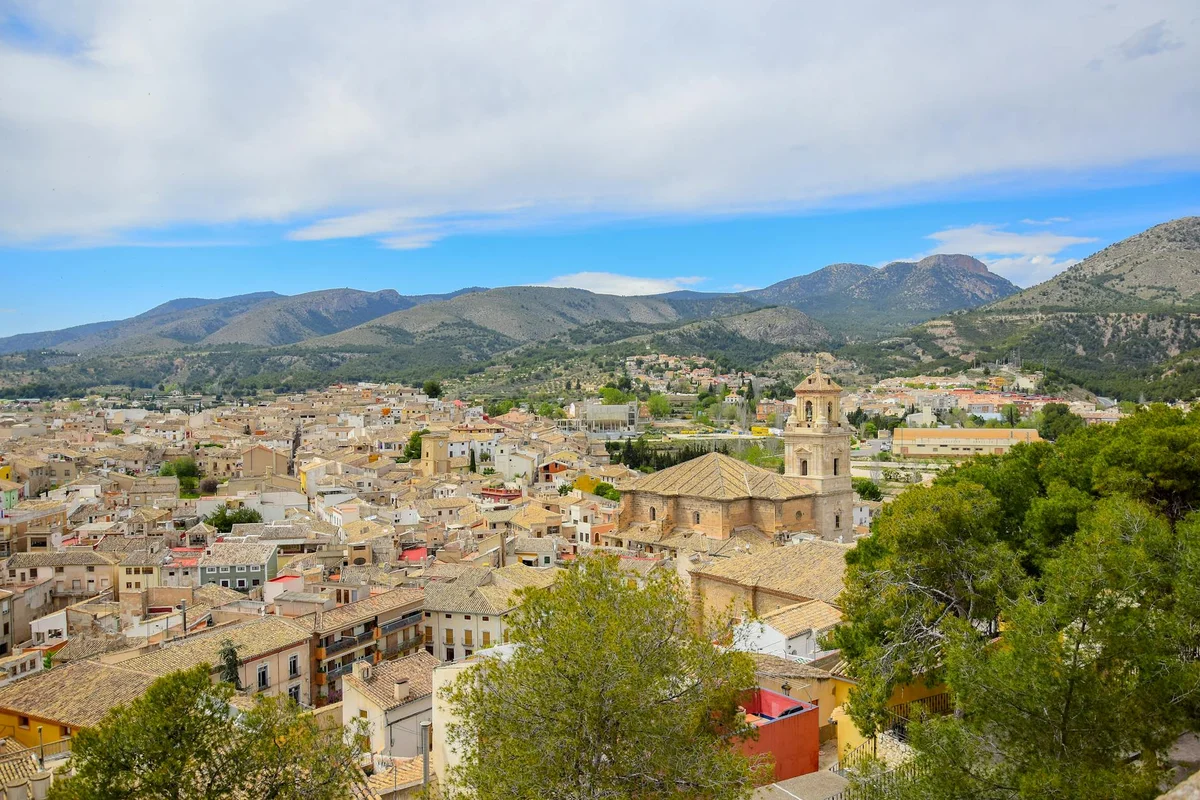
Jumilla, the larger of the two, sits at an altitude of around 560 metres above sea level and is dominated by a dramatic Moorish castle that rises above the old town. The town has a legitimate claim to one of the oldest continuously inhabited sites in the Iberian Peninsula, and the local archaeological museum houses finds that stretch back thousands of years. Walking the streets of the casco histórico takes maybe an hour, but understanding what you are looking at takes considerably longer.
Yecla, located roughly 30 kilometres to the north, has a slightly different character: quieter, more introspective, with a skyline defined by the baroque bulk of the Basílica de la Purísima Concepción. The town is the spiritual home of the Monastrell grape in its most concentrated, age-worthy form, and several of its bodegas have achieved international recognition without abandoning the family-run, low-intervention ethos that makes their wines distinctive.
Taken together, the two towns offer a complete picture of inland Murcian life: the archaeology and festive traditions of Jumilla alongside the quiet, artisan winemaking culture of Yecla. Neither can be fully absorbed in a single afternoon, and both genuinely reward the traveller who is willing to slow down.
The Monastrell Grape and the Wine Culture of the Interior
Understanding Monastrell is essential to understanding both Jumilla and Yecla. This thick-skinned, late-ripening grape variety thrives in the extreme continental climate of the Murcian interior, where summer temperatures regularly exceed 40°C and rainfall is scarce. The result is wine of extraordinary concentration and character: deep purple in colour, dense with dark fruit and earthy notes, and capable of ageing gracefully for a decade or more in the right hands.
Both towns hold their own Denominación de Origen status, which means Jumilla wines and Yecla wines are separately classified and regulated. In Jumilla, the DO permits a small number of other varieties alongside Monastrell, leading to some interesting blends, while Yecla leans even more heavily on single-variety Monastrell expressions. Visiting both allows for a fascinating side-by-side comparison of how the same grape speaks differently depending on altitude, soil composition, and winemaker philosophy.
Bodega visits are straightforward to arrange in both towns and do not require the kind of advance planning that equivalent visits in, say, La Rioja or Ribera del Duero often demand. Many of the smaller family bodegas in Yecla operate on an informal appointment basis; a phone call the day before is usually sufficient. In Jumilla, the larger producers such as Casa Castillo and Bodegas Bleda offer more structured tours, though even these retain a warmth and accessibility that feels miles away from the corporate wine tourism of more famous regions.
The local approach to wine is refreshingly unsnobby. In the bars and restaurants of both towns, the house wine is almost invariably a local Monastrell served at the correct temperature with no ceremony whatsoever. Ordering a glass here is an act of civic loyalty as much as personal preference, and the prices reflect that: a generous pour rarely costs more than two euros.
Eating Well in Jumilla and Yecla: The Local Gastronomy
The cuisine of Murcia's inland wine villages is built on the same logic as the wine: take excellent raw ingredients, apply generations of accumulated knowledge, and resist the urge to overcomplicate things. The staples are rice dishes, slow-cooked meat stews, roasted vegetables, and cured pork products of a quality that rarely makes it beyond the regional market. These are not dishes designed to photograph well; they are designed to be eaten after a morning in the vineyard.
In Jumilla, the dish most worth seeking out is arroz caldoso con conejo y caracoles: a soupy, intensely flavoured rice cooked with rabbit and snails that is considered the definitive local preparation. Several restaurants in the town centre serve it as part of a traditional Sunday lunch menu, and ordering it is a reliable way to be accepted as someone who has done their homework. The local cured meats, particularly the longaniza and the morcilla variants unique to the Murcia interior, are worth buying from the municipal market to take home.
Yecla's food culture is similarly rooted in the land, with a stronger emphasis on dishes that evolved to accompany wine specifically. The ajo mataero, a pungent garlic and pork preparation traditionally made during the winter matanza, appears on menus throughout the year in Yecla and pairs with young Monastrell in a way that feels almost cosmically ordained. The town also has a reputation for its pastries, particularly the rosquillos and the pan de higo, a dense fig cake that makes an excellent accompaniment to aged red wine or a local mistela.
The menú del día culture is alive and thriving in both towns. For a set price that rarely exceeds fifteen euros, most family-run restaurants serve a three-course lunch with bread, wine, and coffee included. This is not a tourist concession; it is how local workers eat every day, and the quality reflects that. Arriving at 2pm, sitting at a communal table, and eating whatever the kitchen has prepared is perhaps the single most effective way to experience what slow travel in the Murcia interior actually means.
An Insider Angle: The Bodegas That Do Not Market Themselves
The wine tourism infrastructure in both Jumilla and Yecla is real but deliberately understated, and that understatement conceals something important: several of the most interesting bodegas in the region have no website, no social media presence, and no English-language materials whatsoever. They continue to produce wine of exceptional quality because they have loyal domestic buyers who have been purchasing from them for decades, and they have simply never needed to reach beyond that network.
In Yecla in particular, a handful of very small producers operate almost invisibly from the outside. The way to find them is not through a Google search but through conversation: ask at the local tourism office (which is staffed by people who actually drink the wine and know the producers personally), or ask the owner of whichever bar is serving the most interesting house wine. These conversations tend to lead somewhere useful, and the bodega visits that result from them are categorically different from a standard scheduled tour. There is no script, no gift shop, and no tasting notes printed on laminated cards. There is usually, however, a table, a cured meat, and an invitation to stay longer than planned.
This is the genuine insider angle that conventional wine tourism guides miss: the most memorable drinking experiences in the Murcia interior are not booked through apps or aggregators. They happen because a traveller took the time to be curious and patient in a language that was not their own. That is, ultimately, what slow travel is for.
How to Structure a Slow Travel Stay Across Both Towns
The practical logistics of visiting Jumilla and Yecla are straightforward, though a car is strongly recommended. Both towns are well connected to Murcia city and to Alicante by road, and the drive between the two towns takes around 30 minutes on the A-33. Public transport exists but is infrequent, and the vineyards and smaller bodegas that make the experience worthwhile are rarely accessible without private transport.
A minimum of three nights is the recommended baseline: two in Jumilla and one in Yecla, or the reverse depending on preference. This allows time to visit the castle and archaeological museum in Jumilla, take at least one guided bodega tour, explore the old town at leisure, and still have an unscheduled afternoon for sitting in a plaza with a glass of wine and no particular agenda. That unscheduled afternoon is not wasted time; it is the point.
Accommodation options in both towns are limited but characterful. Jumilla has a small selection of rural hotels and guesthouses within or near the historic centre, several of which are housed in restored 19th-century buildings. Yecla's options are even more modest, which is part of the appeal: staying in a town where there are only two or three places to sleep means encountering other guests who have sought the place out deliberately, and those conversations tend to be more interesting than the ones happening around a hotel pool in Benidorm.
The optimal time to visit is either late spring (May to June) or early autumn (September to October). Summer is possible but demanding given the heat; winter is quiet and atmospheric but some bodegas reduce their visiting hours significantly. The grape harvest in late September is a particularly rewarding time to be present, when the whole region smells of fermenting fruit and the bodegas are operating at full intensity.
Final Thoughts
Slow travel in Murcia's inland wine villages asks something of the visitor that more packaged tourism does not: a willingness to arrive without a rigid agenda, to eat what is on the menu today rather than what was reviewed last year, and to find value in a conversation rather than a landmark. Jumilla and Yecla are not destinations that will overwhelm anyone with activity. They will, however, leave a specific and lasting impression on anyone who gives them sufficient time.
The Monastrell grape, the hilltop castles, the unhurried bar culture, and the family bodegas that have been making wine since before mass tourism existed as a concept: these things are all genuinely available to any traveller willing to cross the threshold from coastal Spain into the interior. The distance from the Mediterranean coast is barely an hour by car, but the experiential distance is vast.
If the idea of drinking excellent wine at local prices, eating three-course lunches that cost less than a city-centre coffee and croissant, and wandering streets that have not yet been optimised for Instagram appeals, then Jumilla and Yecla are waiting. Book a guesthouse, hire a car, and leave at least one afternoon completely unplanned. That is where the real trip begins.
Frequently Asked Questions
How do you get to Jumilla and Yecla from Murcia city?
Both towns are accessible from Murcia city by car in under an hour. Jumilla is approximately 75 kilometres northwest of Murcia via the A-30 and MU-30, while Yecla is around 100 kilometres from Murcia city via the A-30 and A-33. Regional bus services do connect Murcia city to both towns, though schedules are infrequent and not well suited to visiting bodegas or rural areas. Renting a car from Murcia or Alicante airports is the most practical option for a slow travel itinerary that includes both towns.
What is the best time of year to visit Jumilla and Yecla?
Late spring (May to June) and early autumn (September to October) are the most rewarding times to visit. Temperatures are pleasant, the vineyards are either flowering or approaching harvest, and the towns are at their most active without being crowded. The grape harvest in late September is a particularly special time, with bodegas in full operation and a festive energy throughout both towns. Summer visits are possible but temperatures can exceed 40°C inland, so early mornings and late evenings become the most comfortable times to be outdoors.
Do the bodegas in Jumilla and Yecla require advance booking?
It depends on the size and formality of the producer. Larger, more established bodegas in Jumilla such as Casa Castillo typically have structured tour programmes that can be booked in advance online or by phone. Smaller, family-run producers in both towns (and particularly in Yecla) often operate on an informal basis and a call the day before is usually sufficient. The local tourism offices in both towns can provide current contact details and recommendations, and they tend to have personal relationships with the producers they recommend.
Is it necessary to speak Spanish to enjoy a visit to Jumilla and Yecla?
English is spoken at the larger and more internationally oriented bodegas, and some accommodation providers will have basic English. However, the majority of restaurants, bars, smaller bodegas, and local shops operate almost entirely in Spanish, and in some cases in the local Murcian dialect. Having even a basic level of conversational Spanish will dramatically improve the experience, both in terms of practical logistics and in terms of the human connections that make slow travel meaningful. A translation app on a smartphone handles most situations where language becomes a barrier.
What are the main wines to try in Jumilla versus Yecla?
Both towns produce wine primarily from the Monastrell grape, but the expressions differ noticeably. Jumilla wines tend to be powerful and fruit-forward, often with a generous, approachable quality, and the region also produces some interesting white and rosé wines from varieties including Airén and Macabeo. Yecla wines lean toward greater concentration and structure, with the best examples showing earthy, mineral qualities alongside the characteristic dark fruit of Monastrell. Yecla's Bodegas Castaño is among the most internationally recognised producers in the region, though many smaller producers offer wines of comparable quality at lower prices. Tasting wines from both towns side by side is the most effective way to appreciate the differences.